
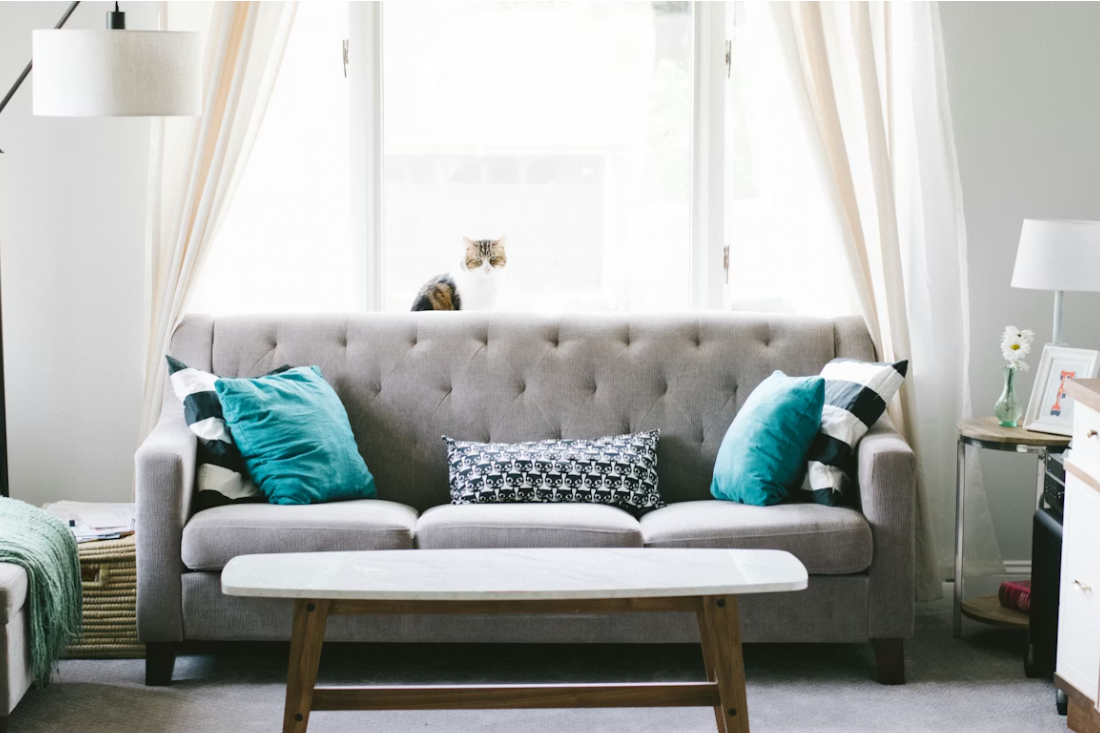
If you feel like your apartment is closing in on you, you don’t have a space problem—you have a logistics problem. We often treat our homes as static containers, but they are actually dynamic environments where every square inch carries a cost. In a small apartment, “dead space” is the enemy of mental clarity. To reclaim your home, you need to think like a naval architect: every object must have a purpose, and every surface must be multi-functional. Are you ready to stop fighting your floor plan and start outsmarting it?
The Physics of Small Space Management
Most people focus on the floor. They look at the square footage and assume that’s all they have. This is a fundamental error in spatial geometry. Your apartment is a three-dimensional volume, not a two-dimensional plane. When you ignore the space between the top of your bookshelf and the ceiling, you are essentially leaving money on the table.
Verticality: The Most Underutilized Asset in Your Home
Gravity is a constant, but your storage doesn’t have to be. By shifting your perspective from the horizontal to the vertical, you unlock massive amounts of storage potential. Floor-to-ceiling shelving units don’t just hold books; they draw the eye upward, making a room feel taller while housing your entire life. Think of your walls as a second floor. Why leave them empty when they can be your pantry, your library, or your tool shed?
Multi-Functional Furniture: The Swiss Army Knife Strategy
In a studio or a one-bedroom, every piece of furniture must “pay rent” by performing at least two jobs. If your sofa only provides a place to sit, it’s a slacker. In the analytical world of home optimization, we look for “force multipliers”—items that solve two problems simultaneously.
Storage Beds: Converting Sleep Surfaces into Industrial Warehousing
The area under your bed is approximately 30 to 40 square feet of prime real estate. Letting it collect dust bunnies is a waste of resources. A hydraulic lift bed or a bed frame with integrated drawers is essentially a horizontal closet. This is the ideal location for “seasonal inventory”—winter coats in the summer, extra linens, or sports equipment. It keeps the items out of your daily sightline while maintaining immediate accessibility.
The Nesting Principle: Coffee Tables and Desks
Nesting furniture is the ultimate “space-on-demand” solution. A set of three nesting tables provides the surface area of a large coffee table when you have guests, but collapses into the footprint of a single end table when you are alone. It’s modularity at its finest. Does your desk need to be six feet wide all day, or can it be a fold-down “murphy desk” that vanishes when the workday is over?
Ottomans: The Hidden Utility of Secondary Seating
A hollow ottoman is a master of disguise. It serves as a footrest, an extra seat for a guest, and a chest for blankets or board games. It’s an analogy for the perfect small-space inhabitant: versatile, compact, and highly efficient.
Kitchen Optimization: Managing High-Density Utility
The kitchen is often the most cluttered area because it requires the highest density of tools. If your counters are covered in appliances, your “workstation” is compromised. We need to move the tools off the horizontal plane.
Magnetic Architectures: Moving Beyond the Drawer
Drawer space is finite and often disorganized. Magnetic knife strips and magnetic spice tins allow you to use the “skin” of your refrigerator or the backsplash of your stove as storage. This isn’t just about saving space; it’s about ergonomics. Having your most-used tools within arm’s reach but off the counter is a win-win.
Over-the-Sink Engineering: Reclaiming Countertop Real Estate
The sink is a giant hole in your counter. By using an over-the-sink drying rack, you regain that lost area. These tiered racks allow dishes to drip-dry directly into the basin, eliminating the need for a bulky side-rack that eats up prep space. It’s a simple mechanical upgrade that changes the entire flow of your kitchen.
The Closet Revolution: Maximizing Linear Footprint
Most closets are designed poorly, with a single rod and a high shelf. This leaves a massive “void” in the middle. We need to re-engineer the closet to match the specific dimensions of your wardrobe.
Z-Axis Hangers: Increasing Hanging Capacity by 300%
Traditional hangers consume horizontal space. Vertical “cascading” hangers allow you to hang five garments in the space of one. By utilizing the Z-axis, you can fit an entire season’s wardrobe into a fraction of the rod length. Pair this with a hanging shoe organizer—not for shoes, but for rolled-up t-shirts and sweaters—and you’ve suddenly doubled your closet’s IQ.
Digital Storage for the Physical World
One of the greatest storage solutions isn’t a shelf; it’s a scanner. We live in a digital age, yet many of us still maintain filing cabinets full of paper.
The Paperless Manifesto: Scanning Away the Clutter
Every manual, bill, and old letter can be digitized. By moving your “archive” to the cloud, you eliminate the need for physical storage units. This clears the “visual noise” of your apartment and makes your information searchable. Why keep a physical box of tax returns from 2018 when a PDF takes up zero square inches?
Entryway Solutions: The First Line of Defense Against Entropy
Clutter usually enters the home through the front door. Mail, keys, shoes, and bags accumulate in a “dump zone.” A slim entryway console with hooks and a small bench creates a “sorting station.” If you stop the clutter at the perimeter, it never makes it into your living sanctuary.
Bathroom Micro-Storage: Exploiting Dead Space
The space above the toilet is almost always empty. An “over-the-toilet” shelving unit is a classic for a reason—it exploits a vertical void. Additionally, using “over-the-door” organizers for toiletries can free up your limited vanity space. In a small bathroom, every inch is a battleground.
Conclusion: Developing a Sustainable Spatial Philosophy
Living small doesn’t mean living “less.” It means living with intention. By applying these analytical storage solutions, you transform your apartment from a cramped box into a streamlined machine. Remember: if you haven’t touched an item in a year, it’s not an asset—it’s a liability. Edit your belongings, optimize your vertical space, and choose furniture that works as hard as you do. Your home should be a launchpad, not a storage unit.
Frequently Asked Questions (FAQs)
1. How do I make a small room look larger while adding storage? Use “leggy” furniture. If you can see the floor underneath a sofa or a storage unit, the room feels more open. Also, use mirrors to bounce light and create the illusion of depth.
2. Is it worth it to buy custom built-ins for a rental? Probably not. Instead, look for modular “tension-rod” shelving systems or freestanding units that you can take with you when you move. They offer the look of built-ins without the permanent commitment.
3. What is the biggest mistake people make in small apartments? Buying “small” furniture. Ironically, many small pieces can make a room feel cluttered. Often, one large, well-placed sectional or a single floor-to-ceiling bookshelf is better than five tiny items.
4. How do I handle “visual clutter” in open shelving? Use uniform bins or baskets. By hiding the varied shapes of your items inside consistent containers, you create a “clean” visual line that reduces the feeling of chaos.
5. How often should I “audit” my storage? At least once every six months. As your life changes, your storage needs will too. A seasonal audit ensures that your systems aren’t being clogged by items you no longer use.