
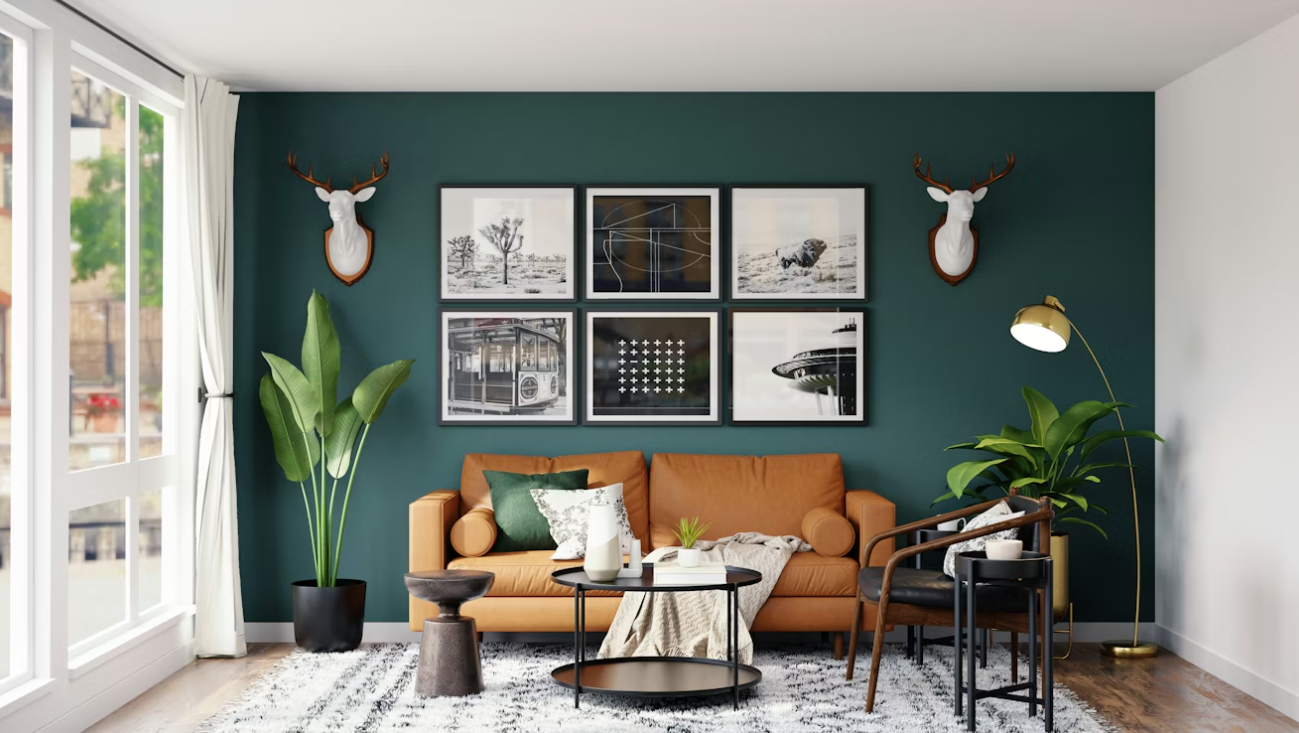
Is your home a charging station for your devices, or a charging station for your soul? We spend roughly 90% of our lives indoors, yet many of us live in spaces that feel more like waiting rooms than residences. To create a “fresh” living space that is also “cozy,” we have to stop thinking about decor as a luxury. Instead, we should view it as a biological necessity. Think of your home as a second skin. If that skin is cold, hard, and brightly lit, you will never truly relax.
The Science of Environmental Comfort
When we walk into a room that feels “right,” our brains are processing a lack of threat. Sharp angles, high-contrast colors, and harsh echoes signal to our primitive brain that we are in an exposed, high-alert environment. A cozy space does the opposite; it provides “refuge” and “prospect.” By strategically altering our decor, we can lower our baseline cortisol levels without ever leaving the couch.
How Interior Density Impacts Cognitive Load
A room that is too empty feels cold; a room that is too full feels chaotic. The “sweet spot” of cozy decor is found in moderate density. This means having enough items to dampen sound and provide visual interest, but not so many that the brain has to work overtime to process the clutter.
1. Layering Textiles: The Thermal and Tactile Barrier
The fastest way to add “soul” to a room is through textiles. I’m not talking about a single throw pillow. I’m talking about a deliberate layering of different weights and weaves. When you mix a chunky knit blanket with a smooth linen sofa and a velvet cushion, you are creating a “tactile playground.”
The Weighted Blanket Effect: Why Texture Matters to Your Skin
Your skin is your largest sensory organ. Soft, heavy textures mimic the feeling of a hug, triggering the release of oxytocin. Analytically, a room without textiles is a room with poor acoustic insulation. Fabrics absorb the “bounce” of sound, making your home feel quieter and more intimate.
2. Mastering Luminal Warmth: The Kelvins of Comfort
Lighting is the “make or break” factor of home decor. If you are still using 5000K “Daylight” bulbs in your living room at 8:00 PM, you are effectively telling your brain it is high noon in the middle of summer.
Moving Away from the “Interrogation Light”
Overhead lighting is often harsh and flat—it’s what I call “interrogation light.” To create a cozy atmosphere, you need to switch to bulbs in the 2700K to 3000K range. This warm, golden glow mimics the light of a sunset or a fire, which naturally signals the body to prepare for rest.
The Three-Point Lighting System for Living Rooms
Instead of one big light, use three small ones. A floor lamp for reading, a table lamp for mid-level glow, and perhaps a candle or a small LED strip behind the TV. This creates “pockets” of light and shadow, giving the room depth and mystery.
3. Biophilic Integration: Bringing the Outside In
Humans have an innate connection to nature, known as biophilia. A room with zero plants feels “dead” because, biologically, it is. Adding greenery doesn’t just look good; it improves air quality and provides a visual “rest point” for your eyes. If you aren’t a green thumb, even high-quality dried botanicals or pampas grass can provide that organic, irregular geometry that softens a modern room.
4. The “Scent-scape”: Olfactory Anchors for Relaxation
We often forget that decor is for all five senses. The way a room smells is the first thing your brain registers. Using woodsy scents like cedar, sandalwood, or amber can “ground” a space. Think of scent as an invisible layer of furniture. It fills the gaps and sets the emotional tone before you even sit down.
5. Curves Over Angles: Softening the Geometry of Your Room
Modern architecture loves the 90-degree angle. While efficient, rectangles are not “human” shapes. By introducing rounded coffee tables, arched mirrors, or curved sofas, you break up the “grid” of the room.
The Psychology of Rounded Furniture
Studies in neuro-aesthetics show that humans perceive rounded shapes as safer and more approachable than sharp ones. A round rug, for instance, can act as a “soft island” in a room full of square walls, drawing people toward the center of the space.
6. Creating “Nooks”: The Concept of Architectural Refuge
In a large, open-concept living space, you can actually feel exposed. To make it cozy, you need to create “micro-zones.” A single armchair placed in a corner with its own small rug and lamp creates a “reading nook.” This provides a sense of enclosure—a “den” within the house where you can feel tucked away from the world.
7. Earth-Toned Palettes: Anchoring Your Visual Field
If your walls are stark white, every shadow and speck of dust stands out. Switching to “earth tones”—terracotta, sage green, or warm taupe—anchores the room. These colors are found in nature, so our eyes don’t have to work as hard to process them.
Why Muted Tones Reduce Visual Noise
Bright, saturated colors are “loud.” They demand attention. Muted, desaturated tones are “quiet.” They provide a backdrop that allows your furniture and your own presence to be the focus. It’s like turning down the volume on the room itself.
8. Intentional Bookshelf Curation: A Mirror of the Mind
A bookshelf shouldn’t just be a storage unit; it’s a gallery. Avoid the “minimalist” trend of turning book spines inward. Seeing the colors and titles of books you love adds a layer of intellectual “warmth” to the space. Mix books with small sculptures, vases, or travel souvenirs to create a “curated” look that feels lived-in rather than staged.
9. Floor-Level Softness: The Foundation of Warmth
If you have hardwood or tile floors, you have a “heat sink” that is constantly pulling warmth away from your feet. A high-pile rug or a layered rug setup (a large jute rug with a smaller plush rug on top) provides physical insulation and visual weight. It “grounds” the furniture so it doesn’t look like it’s floating in space.
10. Personal Artifacts as “Dopamine Decor”
The final layer of a cozy home is “you.” A room that looks like a catalog page has no soul. Incorporate items that trigger positive memories—a framed map of your favorite city, a quilt passed down from a relative, or art you bought on a whim. These are “dopamine anchors” that make the space feel uniquely yours.
Conclusion: Synthesizing Comfort and Modernity
A cozy home is not about being “old-fashioned” or “cluttered.” It is about the intentional calibration of your environment to suit your biological needs. By layering textures, warming up your light, and embracing organic shapes, you turn your living space into a tool for recovery. Don’t just decorate for the eyes of your guests; decorate for the nervous system of the person who lives there every day.
Frequently Asked Questions (FAQs)
1. Can a minimalist home still be cozy? Absolutely. Minimalism is about “less,” but cozy is about “quality.” A minimalist home can be incredibly cozy if the few items present are high-quality textiles, warm wood, and soft lighting.
2. What is the cheapest way to make a room feel cozy? Change your light bulbs. Swapping “Cool White” for “Warm White” (2700K) is the single most impactful change you can make for under $20.
3. How do I make a large, high-ceiling room feel intimate? Focus on the “human scale.” Bring your art down to eye level, use tall plants to fill vertical voids, and use dark colors on the ceiling or upper walls to “bring the ceiling down” visually.
4. Are candles better than diffusers for coziness? Candles provide the added benefit of “living light”—the flicker of a flame is deeply soothing to the human brain. However, diffusers are better for consistent, long-term scent management without the fire risk.
5. How do I balance “cozy” with “fresh” in the summer? Swap heavy wools for lighter linens and cottons. You can keep the “layered” look without the heat by using breathable fabrics and lighter colors like sky blue or pale sand.