
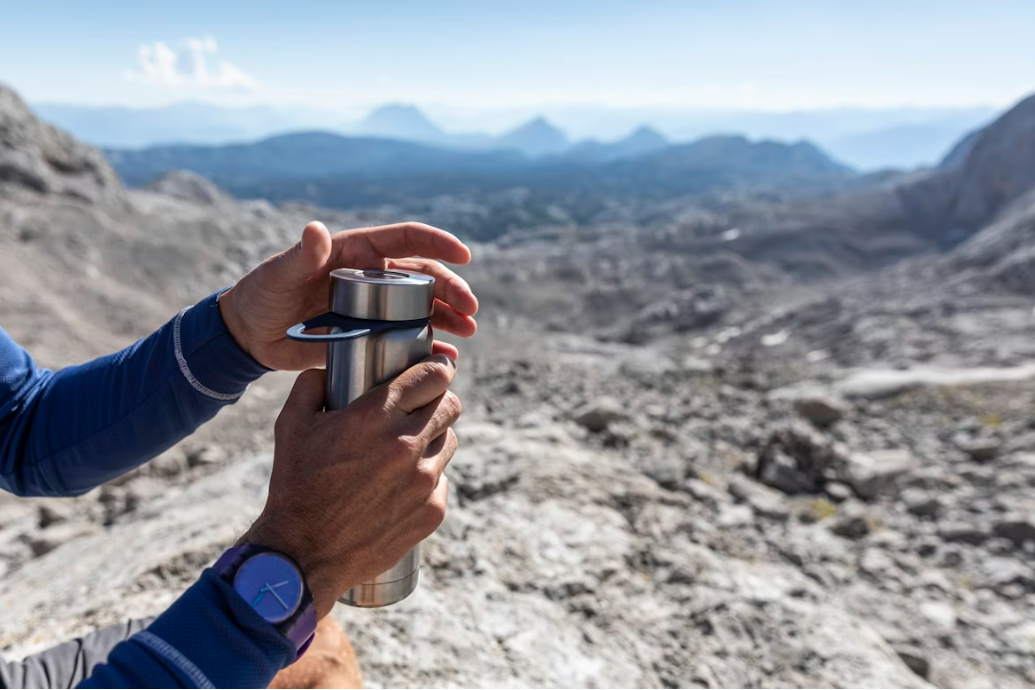
Let’s face it: most of us are walking around like wilted plants, wondering why we have a headache at 3:00 PM. We know we need to drink more water, but the friction of a lukewarm, metallic-tasting drink or a leaky cap often stands in our way. In 2026, the “best” water bottle isn’t just a leak-proof lid; it’s a piece of gear designed to lower the barrier to entry for health. Whether you are navigating a corporate boardroom or a mountain trail, your bottle is your primary life-support system.
The Engineering of Hydration: Why Your Bottle Choice Matters
When we analyze hydration habits, we see that people drink more when the water is the right temperature and the delivery method is seamless. Have you ever noticed how much faster you finish a drink when it has a straw versus a screw-top? That’s behavioral engineering. A good bottle removes the “work” from drinking.
Moving Beyond the Disposable Mentality Single-use plastics are not just an environmental disaster; they are a health liability. Microplastics leaching into your water is a real concern in 2026. Investing in a high-quality, reusable vessel is a commitment to your long-term cellular health.
Material Science: Glass vs. Stainless Steel vs. Plastic
From a technical standpoint, the material of your bottle dictates the taste and safety of your water.
Double-Walled Vacuum Insulation: The Physics of Cold Stainless steel dominates the market for a reason. By creating a vacuum between two layers of steel, manufacturers essentially “stop” heat transfer. This means your ice can stay solid for 24 hours, even in a hot car.
Understanding Thermal Retention Limits While some brands claim “48 hours of cold,” the reality depends on how often you open the lid. Every time you take a sip, you introduce ambient air. If you want the best retention, look for bottles with copper-lined interiors, which act as a radiation shield for temperature.
Borosilicate Glass: Purity at the Cost of Fragility If you are a “water sommelier” who hates the slight metallic tang of steel, glass is your only option. Borosilicate glass is engineered to handle temperature shifts without shattering, providing the cleanest flavor profile possible. However, unless it has a heavy-duty silicone sleeve, it’s not the best choice for the “clumsy” among us.
Categorizing the Contenders: Which Bottle Fits Your Lifestyle?
1. The Executive Choice: The Insulated Stainless Steel Tumbler These are designed to fit in car cup holders and sit on desks. They usually feature large handles and straw lids. They are perfect for people who spend their time in climate-controlled environments and want to sip constantly throughout the day.
2. The Wilderness Warrior: Lightweight Titanium and Filtration Systems If you are hiking, every gram counts. Titanium bottles offer the strength of steel at a fraction of the weight. Furthermore, integrated UV-C or carbon filters allow you to turn tap water or stream water into potable gold.
3. The Gym Enthusiast: High-Flow Straws and Impact Resistance In the middle of a HIIT session, you don’t want to fumble with a screw-top. You need a “high-flow” lid that allows you to hydrate quickly without breaking your stride. Tritan plastic (BPA-free) is often favored here for its shatterproof nature.
Top 5 Water Bottle Recommendations for 2026
The Gold Standard: Owala FreeSip This bottle has taken the world by storm because of its “dual-mode” lid. You can either sip through a built-in straw or swig through a wide-mouth opening without changing caps. It’s a masterclass in ergonomic design.
The Tech Pioneer: LARQ Self-Cleaning Bottle If you are prone to forgetting to wash your bottle (leading to that “swamp smell”), the LARQ is for you. It uses a UV-C LED in the cap to kill 99.9% of bacteria every few hours. It’s an analytical solution to a hygiene problem.
The Durability King: Stanley Quencher H2.0 Despite the social media hype, the Quencher remains a solid choice for home and office use. Its tapered base fits almost any cup holder, and the recycled stainless steel construction is incredibly robust.
The Minimalist: Yeti Rambler with MagChic Cap Yeti is the “over-engineered” choice. Their MagChic cap uses magnets to keep the lid out of your face while you drink. It’s simple, indestructible, and dishwasher safe—which is more important than most people realize.
The Eco-Innovator: Ocean Bottle For every bottle sold, this company funds the collection of 1,000 plastic bottles from the ocean. Beyond the ethics, the bottle features a dual-opening lid that makes it easy to add ice and even easier to clean.
Maintenance and Hygiene: Avoiding the Biofilm Trap
An unwashed water bottle is a breeding ground for biofilm—a slimy layer of bacteria. Even if you “only put water in it,” the bacteria from your mouth transfer to the rim. Analytically speaking, you should choose a bottle that is “dishwasher safe” or has a wide enough mouth for a bottle brush. If you can’t reach the bottom, you aren’t cleaning it.
Conclusion: Fluidity in Your Daily Routine
At the end of the day, the best water bottle is the one you actually carry with you. Whether you prioritize the tech-savviness of a self-cleaning cap or the ruggedness of a magnetic lid, the goal is to make hydration an effortless part of your background processing. Find the tool that fits your grip, keeps your water at your preferred temperature, and watch your energy levels stabilize.
Frequently Asked Questions (FAQs)
1. Is it better to have a straw or a spout?
Studies show that people tend to drink more water when using a straw because it requires less effort and doesn’t require tilting the head back. However, spouts are easier to clean.
2. Are plastic bottles ever okay?
Yes, as long as they are BPA and BPS-free. High-quality plastics like Tritan are lightweight and durable, making them ideal for hiking and the gym where glass or heavy steel might be a burden.
3. How often should I deep-clean my bottle?
Ideally, you should rinse it daily and give it a thorough scrub with soap every 2-3 days. If you use hydration tablets or powders, you must clean it after every use to prevent mold.
4. Why does my water taste metallic in a steel bottle?
This is often due to the grade of steel. Look for “18/8 food-grade stainless steel.” If the taste persists, a bottle with a ceramic interior coating can provide a glass-like taste with steel durability.
5. Do UV-C cleaning caps work on cloudy water?
No. UV-C light needs to be able to penetrate the water to kill bacteria. If the water is muddy or cloudy, the light will be blocked. These caps are designed for clear, pre-filtered water.