
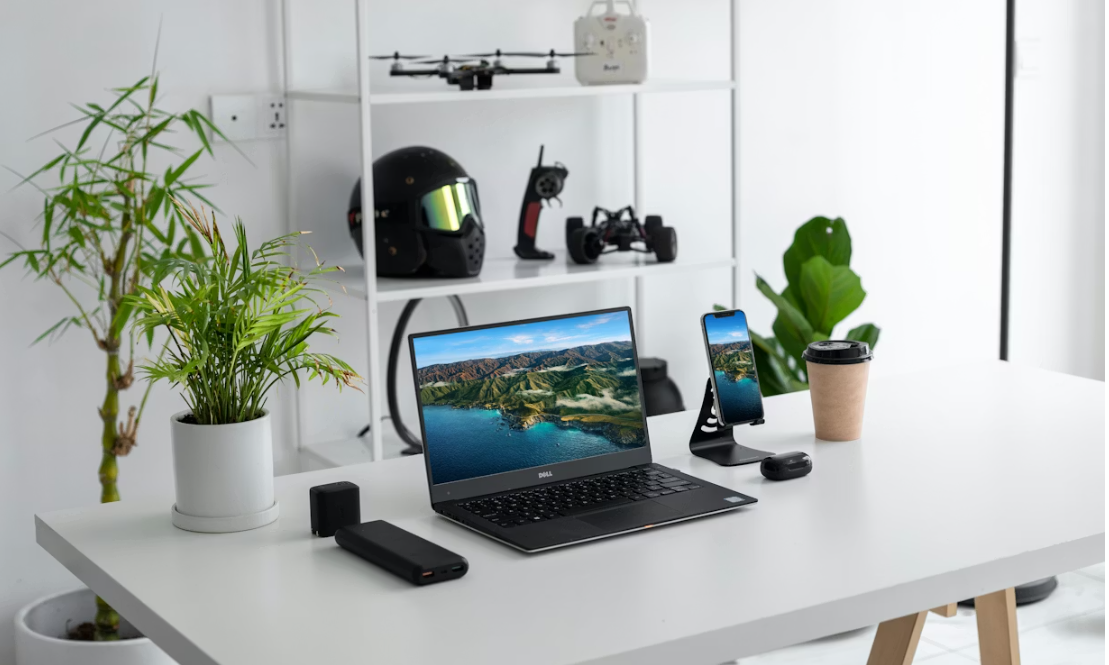
Have you ever stopped to calculate how much time you waste on “micro-tasks”? We’re talking about the thirty seconds you spend searching for keys, the five minutes you spend reheating coffee, or the mental energy used to remember if you watered the ferns. Individually, these are insignificant. Collectively, they represent a “friction tax” on your life. In this analytical deep dive, I’ve identified 15 gadgets that act as high-performance tools to eliminate this tax, allowing you to focus on high-leverage activities.
The Analytical Lens: Why We Adopt New Technology
We don’t adopt gadgets just because they look “cool.” We adopt them because they solve a biological or environmental limitation. Whether it’s extending our sensory range or automating a repetitive physical motion, the best gadgets follow the law of “Maximum Utility.” If a device requires more effort to maintain than the effort it saves, it’s a toy. If it saves more than it costs in energy, it’s a tool.
1. Self-Heating Smart Mugs: Thermal Consistency for Deep Work
Coffee or tea is the fuel for many deep-work sessions. However, hot beverages have a very narrow “ideal temperature” window. A self-heating smart mug uses an internal heating element and sensors to maintain your drink at exactly 135°F (57°C) for hours. By removing the need to walk to the microwave, you preserve your “flow state.” It turns a fluctuating variable into a constant.
2. Fingerprint Padlocks: Biometric Security for the Modern Nomad
Keys can be lost; codes can be forgotten. Biometrics—specifically capacitive fingerprint sensing—replaces external memory with biological data. These padlocks offer sub-second unlocking speeds for lockers, luggage, or bikes. It is a perfect example of reducing the “cognitive load” of security.
3. Portable Power Stations with Integrated Solar Input
We are increasingly tethered to our devices, making “energy security” a top priority. Unlike small power banks, these high-capacity stations can run a laptop for days or a small appliance during a blackout. When paired with foldable solar panels, you essentially own a portable, renewable utility company.
Kitchen Engineering: Automating the Culinary Workflow
The kitchen is perhaps the most labor-intensive room in any home. Engineering-minded gadgets can turn a 60-minute recipe into a 20-minute reality.
4. Automatic Pan Stirrers: Reclaiming Time at the Stove
Many sauces and risottos require constant agitation to prevent scorching. An automatic pan stirrer is a tripod-like device that sits in your pot and rotates at varying speeds. It’s a “hands-free” solution that allows you to prep the rest of your meal while the robot handles the stirring. Why do the work of a motor yourself?
5. Smart Meat Thermometers with Cloud Connectivity
Cooking meat to the perfect internal temperature is a game of thermodynamics.
The Physics of Internal Temperature and Food Safety
Traditional thermometers require you to stand by the oven. Smart versions use Bluetooth or Wi-Fi to send real-time temperature graphs to your phone. It predicts when the meat will be done based on the rate of heat transfer, ensuring you never overcook an expensive cut of protein again.
Workspace Optimization: Tools for the High-Output Professional
If you spend 8 to 10 hours a day at a desk, your hardware is your environment.
6. Vertical Ergonomic Mice: Neutralizing Carpal Strain
Standard mice force your forearm into a “pronated” position, crossing the radius and ulna bones and putting pressure on the carpal tunnel. A vertical mouse allows your hand to rest in a “handshake” position. It’s a simple geometric change that can prevent thousands of dollars in medical bills and lost productivity due to Repetitive Strain Injury (RSI).
7. Portable Triple-Screen Laptop Extensions
Screen real estate is directly correlated with productivity. For the digital nomad, a single laptop screen is a bottleneck. These lightweight, clip-on monitors fold out to create a three-screen panoramic workstation. It allows for “spatial multitasking”—having your research on the left, your draft in the middle, and your communication on the right.
8. Smart Notebooks: Bridging the Analog-Digital Divide
The kinesthetic act of writing by hand is superior for memory retention, but digital files are superior for organization. Smart notebooks allow you to write on “digital paper” with a standard pen-like stylus. With one tap, your handwritten notes are OCR-scanned (Optical Character Recognition) and uploaded to the cloud. It is the best of both worlds.
Home Maintenance and Automation: Delegating the Mundane
Your home should be a sanctuary, not a list of chores.
9. Sonic Window Cleaning Robots: Mastering Vertical Surfaces
Cleaning exterior windows or high glass partitions is dangerous and time-consuming. These robots use vacuum suction to stick to vertical glass and sonic vibrations to scrub away grime. They follow a pre-programmed path, ensuring 100% coverage while you do literally anything else.
10. Smart Plant Sensors: Data-Driven Botany
Most houseplants die because of “subjective care”—we guess when they need water. A smart sensor pushed into the soil measures moisture, light, and nutrient levels, sending a notification to your phone when the plant’s specific biological needs aren’t being met. It’s “Botany as a Service.”
11. Automatic Trash Cans with Self-Sealing Tech
The most unpleasant part of waste management is touching the bag. These cans use infrared sensors to open, and with the press of a button, they use thermal sealing to close the bag and automatically deploy a new one. It turns a tactilely offensive task into a sterile, automated process.
Travel and Personal Mobility: Seamless Transitioning
Travel is the ultimate test of your gear.
12. Electronic Language Translators: Breaking Semantic Barriers
While phone apps exist, a dedicated translator often has superior microphones and dual-facing screens for real-time, face-to-face conversation. They work offline and handle nuances that standard apps miss. In an analytical sense, this gadget reduces “transactional friction” in foreign environments.
13. Tile and AirTag Integrated Wallets: Loss Prevention Systems
The time spent looking for a misplaced wallet is a total loss. Integrating a tracking chip directly into the structure of a slim wallet ensures that if you ever leave it behind, your phone alerts you before you even leave the building. It’s an “active recovery” system for your most important assets.
Wellness and Recovery: Technological Self-Care
In a high-performance life, recovery is not an option; it is a requirement.
14. Smart Sleep Headbands: EEG-Based Sleep Induction
These headbands use medical-grade EEG (electroencephalogram) sensors to monitor your brain waves in real-time. When they detect you are struggling to fall asleep, they use “bio-feedback” (gentle soundscapes) to guide your brain into a delta-wave state. It’s a high-tech solution to the modern epidemic of insomnia.
15. Infrared Light Therapy Devices: Cellular Recovery
Red and near-infrared light at specific wavelengths (660nm and 850nm) penetrates the skin to stimulate the mitochondria in your cells. This increases ATP production, which speeds up muscle recovery and reduces inflammation. It’s a professional-grade recovery tool that now fits in your hand.
Conclusion: The Cumulative Impact of Smart Adoption
The 15 gadgets listed here aren’t just toys; they are components of an optimized life. By choosing gadgets that solve specific, measurable problems, you move from a “reactive” lifestyle to a “proactive” one. Individually, they save seconds. Collectively, they save hours. And in a world where time is the only non-renewable resource, that makes these gadgets the smartest investment you can make.
Frequently Asked Questions (FAQs)
1. Won’t too many gadgets make life more complicated? Only if they aren’t integrated. The “analytical” approach is to only add gadgets that solve a recurring problem. If a gadget doesn’t save you more time than it takes to charge and maintain, don’t buy it.
2. What is the most important gadget for a high-stress professional? The noise-canceling headphones (from previous lists) or the self-heating smart mug. Both protect your focus, which is the most valuable asset a professional has.
3. Are smart home gadgets safe from hackers? Security is a valid concern. Always choose reputable brands that provide regular firmware updates and use two-factor authentication (2FA) for their apps to mitigate risks.
4. How do I choose between an AirTag and a Tile? It depends on your ecosystem. If you use an iPhone, AirTags offer superior “Find My” network density. If you use Android, Tile or specialized Android trackers are the logical choice.
5. Is red light therapy actually scientific? Yes. There are thousands of peer-reviewed studies on “photobiomodulation.” The key is ensuring the device outputs the correct wavelengths (660nm/850nm) and has enough “irradiance” (power) to reach the cells.